How Top Restaurants Turn Diners Into Reviewers
Walk into a top-reviewed restaurant in any city and you will notice something. The food is great, but so is the food at plenty of quieter places down the block. What separates the restaurants with a strong, growing base of Google reviews from the ones that stall out is not luck. It is a system built into how the floor runs each night.
This is how the best independent restaurants build review generation into their operations, and how you can copy the habits starting this week. If you want the actual scripts, QR placement, and templates for the ask itself, see the full guide to asking for Google reviews. This post focuses on the team habits and shift routines that make any ask actually work.
The Mindset Shift: Reviews Are an Operations Problem
Most restaurants treat reviews as a marketing problem, something the owner thinks about once a quarter. The top operators treat reviews like an operations problem, something baked into shift checklists, server habits, and the closing routine.
When reviews become part of how the restaurant runs each night, generating them stops depending on any one person remembering to ask.
Build the Ask Into the Shift, Not a Poster
Independent restaurants reply to only about 15% of the reviews they receive, while larger chains reply to over 50%. That gap is not about effort, it is about whether reply and review habits are actually built into a shift routine or left to chance. The same is true for asking: a sign by the register is easy to ignore, but a habit trained into the closing routine compounds night after night.
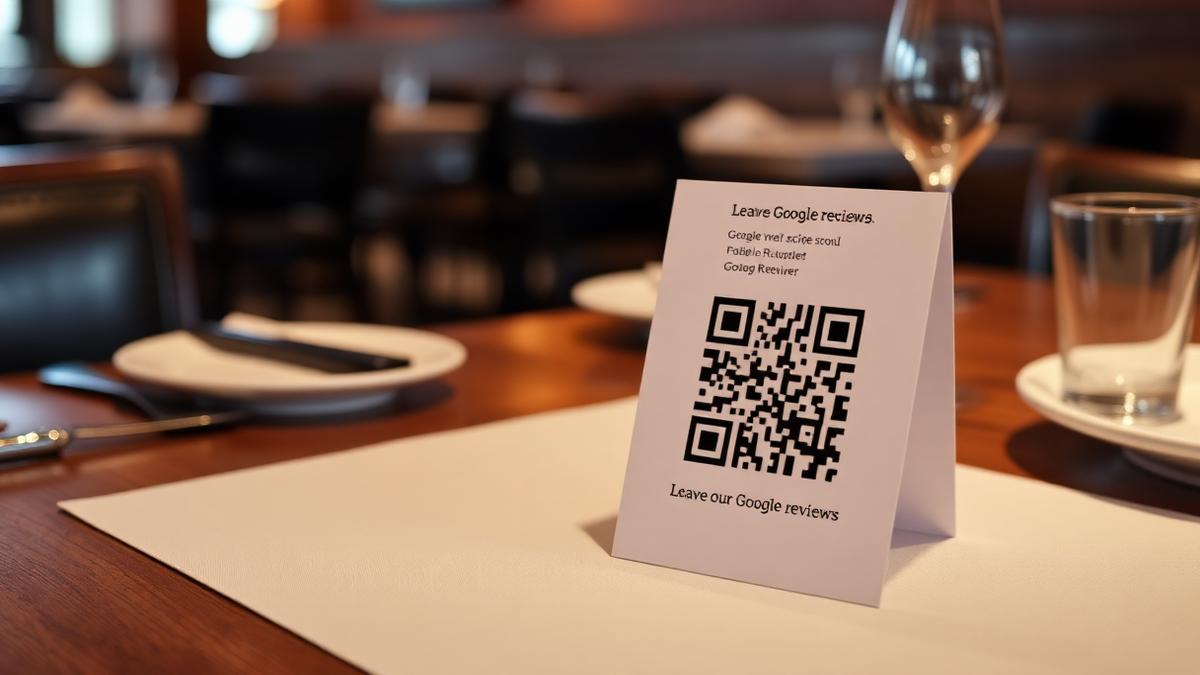
Pick the moment of maximum goodwill on the floor: right after a guest raves about a dish, asks about the chef, or lingers at the table. Train the team to recognize that window and act inside it, rather than waiting until the bill drops. For the exact wording to use in that moment, and where to put a QR code so it actually gets scanned, the full guide to asking for Google reviews covers both in detail.
Build a Daily Rhythm, Not a One-Off Push
Top restaurants do not run review pushes that spike and fade. They run a small, repeatable rhythm.
A typical week looks like this:
| Day | Action | Owner / Team |
|---|---|---|
| Daily | Servers ask 1-2 happy tables | Floor team |
| Daily | Owner or manager replies to every new review | Owner / GM |
| Mondays | Send a thank-you text to weekend regulars | GM |
| Fridays | Refresh the Google Business post | Owner |
| Monthly | Review the average rating and reply rate | Owner |
A daily habit, repeated, builds a steadier stream of reviews than any single campaign.
Reply to Every Review, Especially the Hard Ones
Asking gets reviews in. Replying is what turns those reviews into actual guests walking through the door. Restaurants that respond to 100% of Google reviews vs none see about 16.4% more calls, website clicks, and direction requests on their Google Business Profile (SOCi State of Google Reviews, 2022) than those that leave reviews unanswered, a meaningful signal that responding is worth the time even when the mechanism isn't fully understood.
Good replies share three traits:
For the full approach to writing replies that hold up across every star rating, see the complete review reply guide.
Make Reviews Visible Internally
Top restaurants share new reviews with the team. A simple group text or pre-shift huddle that names the server who got mentioned creates a quiet competitive loop. Servers start asking more, because they like seeing their name in a good review the next morning.
Recognition is cheap and the habit it builds is hard to copy.
What Slows Restaurants Down
If review generation is flat, one of three things is usually true:
Fix those three in order and review activity usually starts moving again within a month.
Where Wimi Comes In
The hardest part of this system is not the asking. Most teams can be trained to ask. The hardest part is replying to every review, in your voice, every day, while also running a kitchen. Wimi was trained on over 1,000 real restaurant review replies across 400+ restaurants, and it drafts and posts a reply to every new Google review in your voice so nothing sits unanswered.
Top restaurants are not better at marketing. They are better at running a small, boring review system every night, then making sure no review goes unanswered.
Try Wimi free at https://app.getwimi.ai/accounts/login/
Frequently asked questions
- What is the best moment to ask a guest for a Google review?
- The best moment is right after a guest gives a spontaneous compliment, asks about the chef, or lingers at the table, while the goodwill from the meal is still fresh.
- Should review generation be a marketing task or an operations task?
- It works best as an operations task built into shift checklists and closing routines, rather than a marketing campaign that spikes and fades.
- Does replying to reviews actually matter for a restaurant?
- Restaurants that respond to 100% of Google reviews vs none see about 16.4% more calls, website clicks, and direction requests on their Google Business Profile (SOCi State of Google Reviews, 2022) than those that leave reviews unanswered.
- Why do independent restaurants reply to fewer reviews than chains?
- Independent restaurants reply to about 15% of reviews on average, compared with over 50% for chains, largely because replying isn't built into a daily routine the way it often is at larger brands.
- How can a small team keep up with replying to every review?
- Tools like Wimi, trained on over 1,000 real restaurant review replies, can draft and post an on-brand reply to every new review automatically so the habit doesn't depend on finding spare time.
Mahrukh Akram
Mahrukh Akram writes about local discovery and reputation for independent restaurants at Wimi.