How to Get More Google Reviews for Your Restaurant (Without Being Pushy)
Quick answer: The most reliable way to get more Google reviews without feeling pushy is to ask at the right moment, keep the ask short and low-pressure, train the right team members to do it, and never tie the request to an incentive or a happy-guests-only filter. Get those fundamentals right first; the tactical scripts and placement tricks matter less than getting this part right.
Timing matters more than wording
The best moment to ask for a review is right after a guest has had a clearly good experience, not at a random point in the visit and not days later by email when the moment has faded. That could be as the check is settled, as a guest is leaving happy, or in a short, personal follow-up message the same day for a group or event booking. The longer the gap between the good experience and the ask, the less likely it is to turn into a review at all.
Keep the tone light
A pushy ask sounds like a demand. A good one sounds like an invitation: "If you have a minute and enjoyed tonight, we'd really appreciate a Google review, it helps a lot." That's it. No explanation of algorithms, no mention of a goal you're trying to hit, no follow-up nudge in the same conversation if they say maybe. Guests can tell the difference between a team that genuinely wants feedback and one that's chasing a number.
Who should be asking
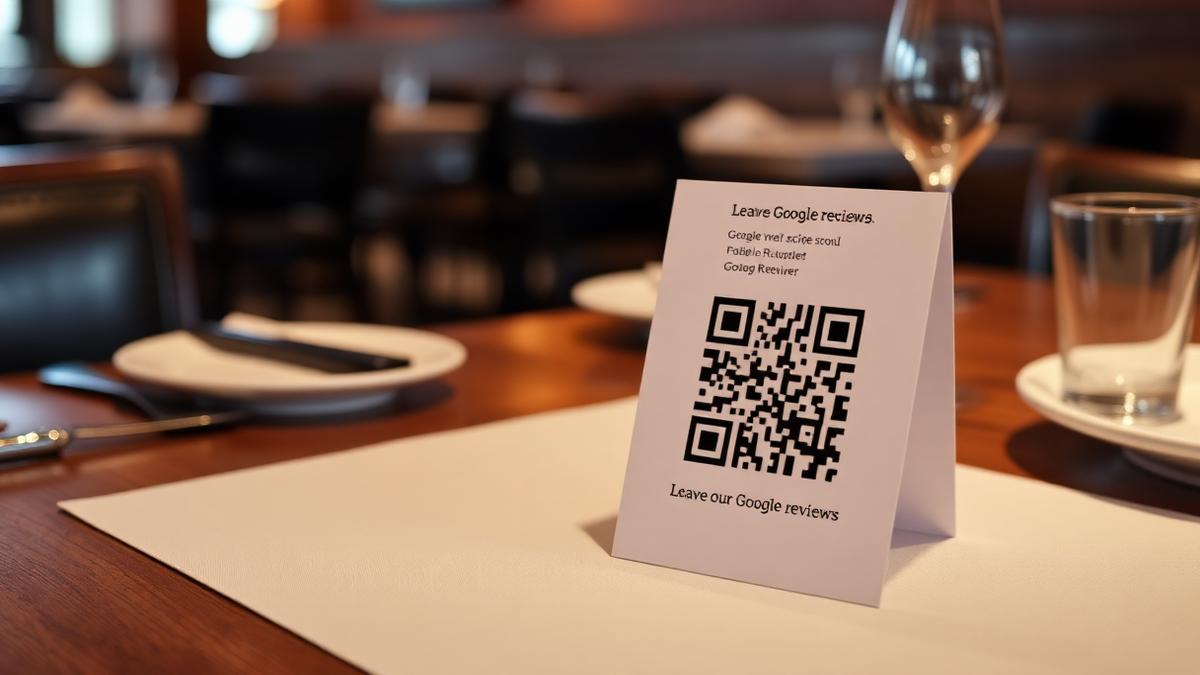
Owners and managers often default to asking everyone, but the person with the most natural opening is usually the server or host who had direct contact with the guest at a good moment, not a generic sign at the register that everyone ignores. If you're training your team on this, keep it to one line they can say naturally and don't turn it into a script they have to recite. For the actual tactical playbook, including where to place QR codes and a library of ready-to-use asking scripts for different situations, the full guide to asking for Google reviews covers that in depth so we won't repeat it here.
What never to do
A few practices cross from "encouraging reviews" into policy violations or guest trust problems, and they're worth naming clearly:
When a guest says yes but forgets
This happens constantly, and it's not a sign you did anything wrong. If a guest agreed at the table but a follow-up text or receipt link exists in your system, a single, friendly reminder a day or two later is fine. What doesn't work is repeated nudges, which start to feel like pressure regardless of how polite the wording is. Treat one ask plus one reminder as the ceiling, and let it go after that.
Why replies make the ask work better
Guests are more likely to leave a review, and more likely to leave a favorable one, when they can see that a business actually reads and responds to what people write. A restaurant with rows of unanswered reviews signals that reviews go into a void; a restaurant that visibly replies to nearly everyone signals that the ask is genuine. Independent restaurants currently reply to about 15% of their reviews on average, compared to over 50% for chains, and restaurants that respond to 100% of Google reviews vs none see about 16.4% more calls, website clicks, and direction requests on their Google Business Profile (SOCi State of Google Reviews, 2022). Replying to every review is worth treating as the other half of this strategy, not a separate task.
Imagine a restaurant called Maple & Thyme that started asking happy dinner guests for reviews at checkout and, at the same time, began replying to every new review within a day or two. The asking habit alone would likely have produced more reviews, but pairing it with visible replies is what makes the ask credible to guests who check the profile before deciding to write something.
A simple way to track whether it's working
Rather than guessing whether your asking habit is paying off, check your review count and rating trend monthly rather than daily. A restaurant asking consistently after good experiences should see a steady trickle of new reviews rather than sudden spikes, and steady is usually a better sign of a sustainable habit than a burst tied to one specific push. One pilot restaurant working on both asking and replying consistently saw its rating move from 4.3 to 4.4 over three months, a modest but real shift that came from steady habits rather than a single campaign.
Getting the reply side handled
If the asking habit is easy enough to build but keeping up with replies to everything that comes in is the part that keeps slipping, that's the piece Wimi is built for: drafting responses to every new review so nothing sits unanswered while you focus on the floor. Try it on your own profile, free to see what it would draft for your most recent reviews.
Frequently asked questions
- Is it against Google policy to incentivize a review?
- Yes. Offering discounts, free items, or entries into a giveaway in exchange for a review violates Google's policies and can lead to review removal or penalties on your profile. It's not worth the risk for a short-term increase in review count.
- How many reviews does a restaurant need before it matters?
- There's no fixed threshold in Google's own guidance, and it varies by market competitiveness. What matters more consistently is the trend: steady, recent reviews and a visible reply habit tend to matter more to guests browsing your profile than hitting a specific total count.
- Should I ask every guest for a review?
- Asking guests after a clearly positive moment works better than asking everyone indiscriminately, and it avoids the appearance of gating happy versus unhappy guests, which is against Google's policies.
- What's the difference between a reminder and being pushy?
- One friendly follow-up after a guest agreed to leave a review is reasonable. Repeated nudges, even politely worded ones, tend to feel like pressure and can work against you.
Mahrukh Akram
Mahrukh Akram writes about local discovery and reputation for independent restaurants at Wimi.