How Guests Judge Your Restaurant Before They Ever Walk In
Quick answer: Before a guest ever calls or shows up, they scan your photos, your rating, your most recent reviews, whether you reply to reviews, your hours, and whether your menu is current, usually in that order and usually in under ten seconds. A profile that looks out of date reads as closed or careless, whether or not that's true.
The decision happens before you know it's happening
A guest searching "restaurants near me" or your specific name doesn't read your website copy first. They land on a search result or a Google Maps pin, and they make a rough judgment in the time it takes to glance at a phone screen. Understanding what's actually in that glance matters more than most owners assume, because it decides whether you get a click, a call, or a scroll past.
What gets scanned, and in roughly what order
Photos first. Photos are the first thing that registers, often before the guest even reads your name properly. Blurry, dark, or years-old photos suggest a restaurant that either doesn't care about its online presence or has changed since those photos were taken. Bright, recent photos of actual dishes and the actual room read as current and cared-for.
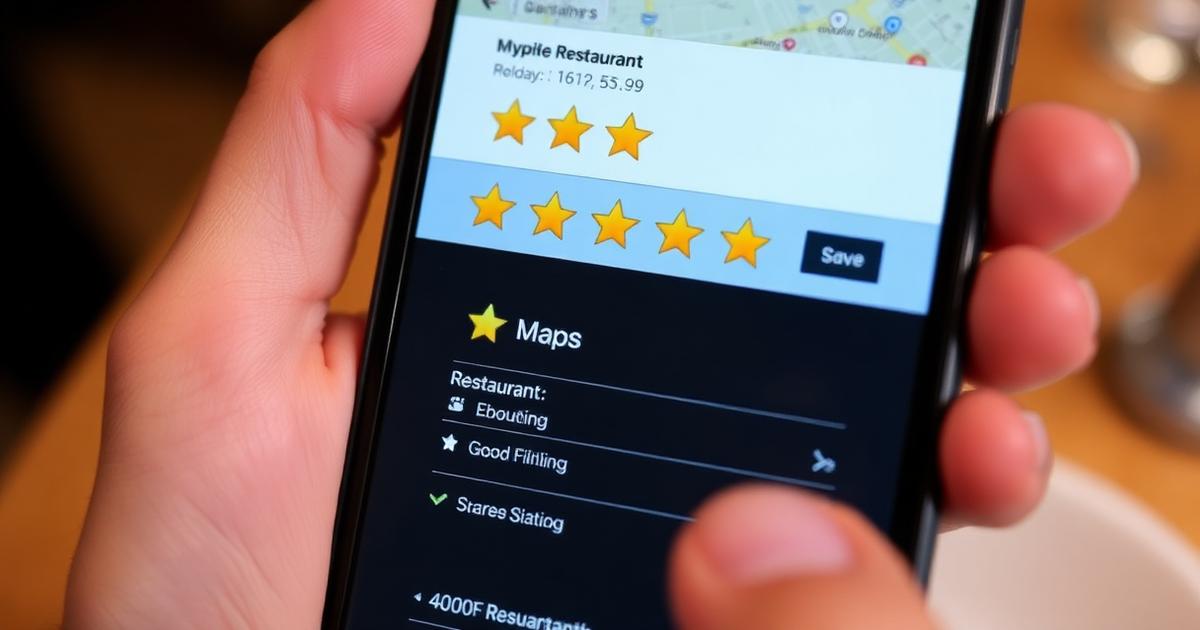
Rating number next. The star rating is the fastest filter a guest applies. It's a snap judgment, not a careful read, so a 3.8 next to a 4.6 competitor can knock you out of consideration before anything else is even seen.
Then the most recent reviews. Guests don't read your oldest, most flattering reviews. They open the two or three most recent ones, because that's what tells them what's happening at your restaurant now, not two years ago. A recent complaint about slow service or a recent compliment about a new dish carries far more weight than anything older.
Whether you reply to reviews. A guest scrolling through reviews notices if the owner responds. A restaurant that replies, especially to less-than-perfect reviews, reads as attentive and still active. Independent restaurants reply to only about 15% of reviews on average, while chains reply to over 50%, so replying consistently is one of the more visible ways an independent restaurant can look as buttoned-up as a chain, without needing chain-level staff.
Hours accuracy. Nothing kills a decision faster than uncertainty about whether you're actually open right now. If your listed hours don't match reality, whether because you closed early once and never fixed it, or because a holiday schedule was never entered, guests either call to check (friction that loses some of them) or simply choose somewhere with hours they trust.
Menu availability. A guest deciding between two similar-looking restaurants will often open the menu to settle it. If there's no menu, or it's a photo of a menu from three years ago with prices that no longer match, that guest has one less reason to pick you over the place with a current, readable menu.
A stale profile reads as a closed one
Imagine a restaurant called Ferro & Vine, a small Italian spot that's actually doing well: steady regulars, good food, no real complaints. But their Google profile hasn't been touched in over a year. The photos are from the old menu before a redesign. The most recent review, from eight months ago, is never replied to. The hours still show the old winter schedule.
A guest who has never been to Ferro & Vine has no way to know any of this is just neglect rather than decline. To them, it looks like a restaurant that stopped paying attention, or worse, one that quietly closed. They don't call to check. They pick the next result down, which happens to have three reviews from last week, all replied to, with a current menu attached.
Nothing about the food changed. What changed is the story the profile told a stranger in eight seconds.
The order matters more than any single factor
None of these signals work in isolation. A great rating with old photos still loses to a slightly lower rating with fresh photos and recent, replied-to reviews, because the whole profile is read as a single impression, not a scorecard. This is part of why reviews affect where you rank on Google Maps as well as how you're perceived once a guest actually finds you: the same signals that build trust with a human scanning your profile also feed the systems that decide whether you show up in the first place.
If you want the fuller picture of how ranking and discovery work together, our local SEO guide for restaurants goes through the mechanics in more depth. And for the specific habit of replying to reviews well, which shows up directly in what guests scan, the review reply guide is the place to start.
What to check this week
You don't need a marketing overhaul to fix most of this. Update your photos if they're more than a year old. Confirm your hours match reality, including holidays. Make sure your current menu is attached and readable. And start replying to reviews, even briefly, because that one habit touches both what guests see and how the algorithm treats your listing.
Curious what a reply to your last review would actually look like. Try it on your own profile, free.
Frequently asked questions
- What matters most online: rating, review count, or recency?
- Recency tends to carry the most weight in a guest's snap judgment. A high rating with old, unanswered reviews reads as less trustworthy than a slightly lower rating with recent reviews that show the owner replying and staying on top of things.
- How often should I update photos on my Google profile?
- Whenever your menu, room, or dishes visibly change, and at least once every few months even if nothing has changed, since fresh photos signal an active, cared-for profile.
- Does replying to reviews actually change guest behavior?
- Restaurants that respond to 100% of Google reviews vs none see about 16.4% more calls, website clicks, and direction requests on their Google Business Profile (SOCi State of Google Reviews, 2022). That's a correlation from observed behavior, not a guaranteed mechanism, but replying is one of the few things fully within an owner's control.
- What's the fastest fix if my profile looks stale?
- Confirm your hours are accurate, add a handful of recent photos, and reply to your most recent unanswered reviews. Those three things address most of what a guest scans first.
Mahrukh Akram
Mahrukh Akram writes about local discovery and reputation for independent restaurants at Wimi.