The Real Cost of Running a Restaurant Solo: Where Owners' Time Actually Goes
Quick answer: A solo restaurant owner's time gets consumed by a mix of visible work (prep, service, staffing) and invisible work (decisions, admin, online upkeep) that never shows up on a schedule. The invisible pile is usually what gets dropped first, and it's rarely the thing that looks urgent in the moment.
The visible day
If you ask a solo owner what they did today, you'll get a list that sounds manageable on paper: check the delivery, prep the line, cover a call-out, run service, close the register, do the deposit. Each item is a task. None of them individually takes all day. But stacked together, from early morning delivery checks to late-night closing, they fill the hours that most jobs would call a full workday, and that's before anything unexpected happens.
Something unexpected almost always happens. A cooler starts running warm. A supplier substitutes an item without warning. Someone calls in sick two hours before their shift. None of these are dramatic on their own, but they interrupt whatever else was planned for that stretch of time, and the plan has to be rebuilt on the fly.
The work nobody schedules
Underneath the visible day is a second layer of work that doesn't fit into a shift schedule because it isn't tied to a specific time. This is where a lot of owners describe losing the most ground.
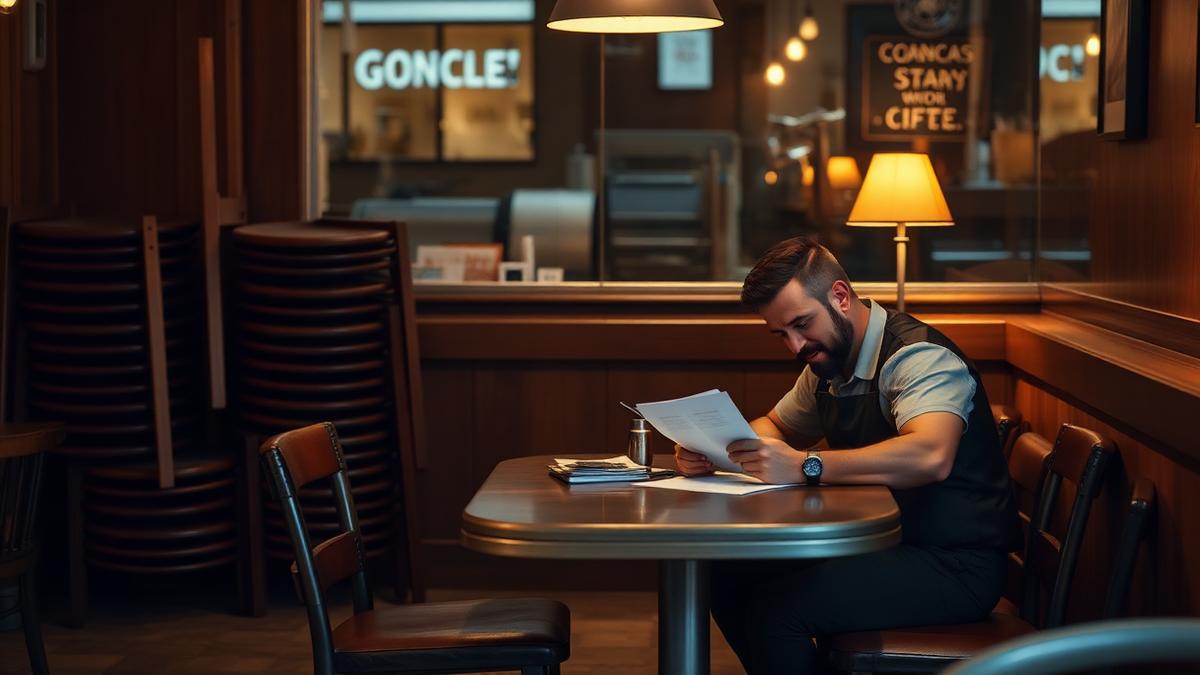
That last category is easy to underestimate because none of it takes long individually. Answering one review takes a couple of minutes. Updating hours takes thirty seconds. But it tends to happen at 11pm after close, stacked on top of a body that's already tired, and it competes with sleep more than it competes with anything else in the day.
The invisible costs
The hardest costs to see are the ones that don't show up as a missed task. A few show up again and again in how owners describe their weeks.
Decision fatigue. Every one of those small interruptions, the cooler, the call-out, the substitution, requires a decision. None of them is hard by itself. But by the tenth or twentieth decision of the day, judgment gets worse, not because the owner is careless, but because attention is a finite resource and it's been spent.
Deferred maintenance. Not just equipment. Deferred maintenance also applies to the business itself: the menu that hasn't been reviewed in a year, the online listing that still lists the old hours, the marketing that hasn't changed since opening. None of these are broken exactly. They just slowly drift out of date because updating them requires time that's already spoken for.
No time to think about growth. This is the cost owners mention most when they step back and look at a full year rather than a single week. Running the restaurant well today leaves little room to think about what the restaurant could look like in a year: a new daypart, a catering line, a second location. Thinking about growth requires a kind of unhurried attention that's hard to get to when the day is full of decisions that can't wait.
What tends to get dropped first
When something has to give, it's rarely the thing that would cause an immediate problem. Owners don't skip payroll or ignore a health code issue. What gets dropped first is usually whatever has no deadline and no one asking about it directly.
That often means:
None of these are catastrophic to skip for a week. The problem is that a week turns into a season, and by the time an owner circles back, the online listing looks stale, the review section looks unattended, and it takes more effort to catch up than it would have taken to keep pace along the way.
Imagine a restaurant called Corner Table Bistro, run by one owner who also cooks most shifts. For the first year, review replies happen in bursts, a flurry after a bad week, then silence for a month, then another flurry. Nothing about that pattern is unusual. It's just what happens when the reply queue competes with everything else on the list and loses most of the time.
What actually helps
There isn't a way to add hours to a day, so the honest answer to "how do I fix this" is usually about triage rather than a single fix. A few things owners say help:
Batch the after-hours work into a single short window instead of letting it interrupt the day in pieces. Ten focused minutes once a day beats being pulled away six times.
Decide in advance what gets skipped on a bad week. If review replies or social posts are going to slip, let them slip on purpose rather than by accident, and know what the plan is for catching back up.
Lower the cost of the tasks that don't need full attention. Some of the after-hours pile, like drafting review replies, doesn't need to start from a blank page every time. If you haven't looked at how you're handling that part of the routine, the review reply guide walks through a lighter way to keep up with it without it eating another hour of your night.
None of this changes how much there is to run a restaurant solo. It just changes which parts eat your attention and which parts can wait their turn. For ideas on marketing that don't require blocking out hours you don't have, see marketing ideas for owners with no time.
The bottom line
Running a restaurant solo isn't one hard job, it's a dozen smaller jobs stacked on top of each other, most of them invisible from the outside. The visible tasks get done because they have to. The invisible ones, decisions, upkeep, thinking ahead, get squeezed into whatever time is left over, which is often very little. Understanding that pattern doesn't make the day shorter, but it does make it easier to decide, on purpose, what to protect and what to let go.
If review replies are one of the jobs you'd happily hand off, try it on your own profile, free.
Frequently asked questions
- How many hours does a typical restaurant owner work per week?
- There's no reliable, verified figure we'd want to put in front of you here, and most numbers floating around online aren't well sourced. What's consistent across owners we talk to is the pattern, not a specific hour count: long stretches of visible work like prep and service, plus an unpredictable amount of invisible work like admin, staffing gaps, and after-hours online upkeep, all stacked on the same day.
- What's the first thing solo owners usually stop doing when they get busy?
- Usually the tasks without a deadline and without someone asking about them directly, things like responding to reviews, updating photos on the online listing, or reviewing sales trends. None of these cause an immediate problem when skipped, which is exactly why they're easiest to drop.
- Is decision fatigue a real issue for restaurant owners?
- It's a well-documented general concept: making many small decisions in a row tends to wear down judgment over the course of a day. Restaurant ownership involves an unusually high number of small, unscheduled decisions, from supplier substitutions to staffing gaps, which fits that pattern.
- How can an owner find more time without hiring help?
- Most owners find it's less about finding new time and more about batching and triage: grouping after-hours tasks into one short window instead of letting them interrupt the day, and deciding in advance what's allowed to slip on a bad week so it's a choice rather than an accident.
Mahrukh Akram
Mahrukh Akram writes about local discovery and reputation for independent restaurants at Wimi.