Restaurant review management software
Last updated: October 12, 2026
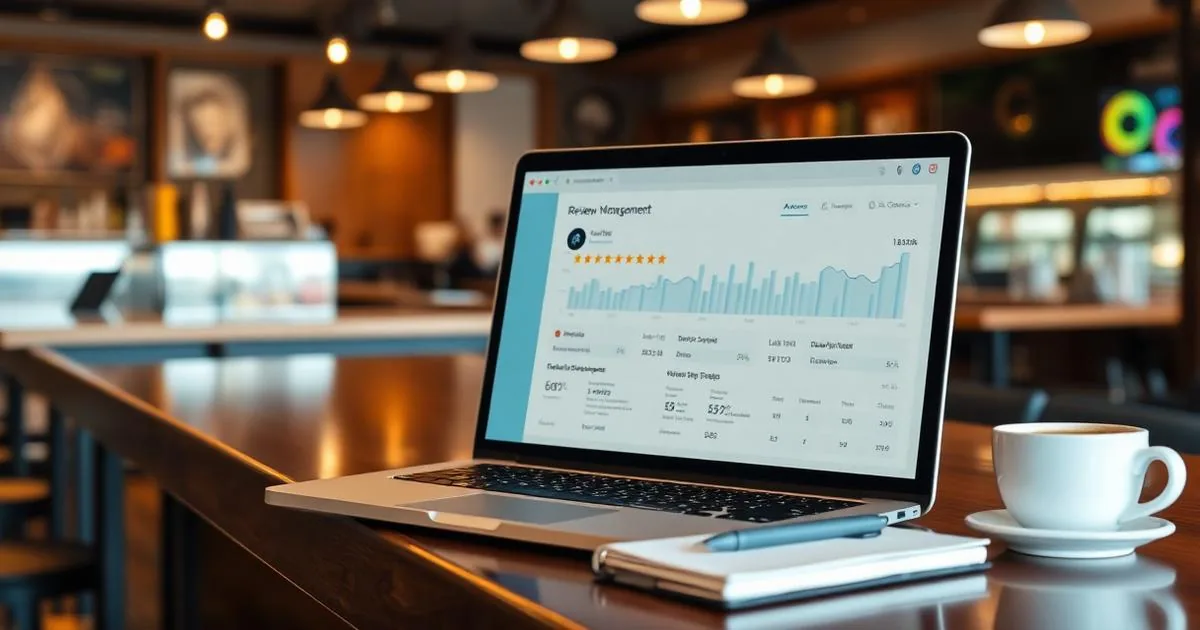
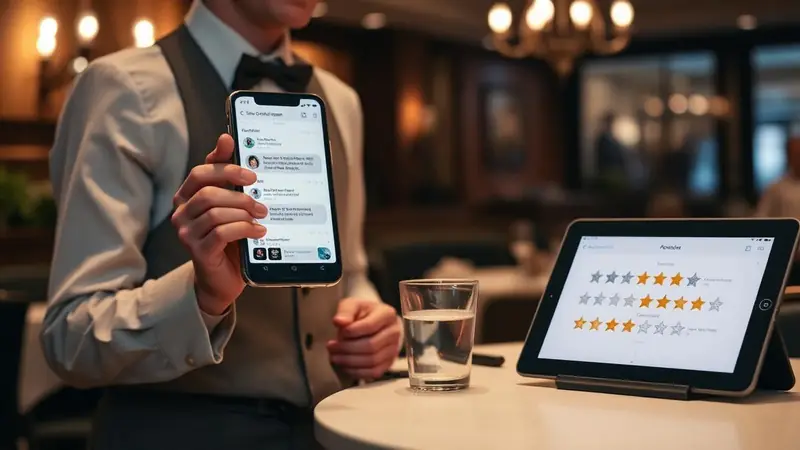
Restaurant review management software should take the work off your plate. Wimi is free forever for 1 location with 7 AI replies a week. It is not a trial. It runs on autopilot with no approval queue, and override is optional.
Start FreeSOCi’s State of Google Reviews (2022) found that responding to 100% of Google reviews, versus responding to none, was associated with 16.4% higher Google Business Profile conversion — calls, website clicks, and direction requests. That is a profile-conversion result, not a traffic or ranking result, and it is not Wimi’s analysis.
Quick answer: for a single independent restaurant, pick the tool that replies to every review without you logging in. Enterprise reputation platforms suit multi-location brands with a marketing manager. Review-generation tools lift volume but leave the replies to you. An autonomous AI review agent is the category built for an owner with no spare hours. See Wimi Free and Pro pricing or read why Wimi.
What is the best review management software for restaurants?
For a single independent restaurant, the best review management software is the one that replies to every Google review without you logging in, which is Wimi. Multi-location brands with a marketing team are better served by enterprise platforms like Birdeye or Podium, compared below.
If you run a restaurant, review management software promises the same thing everywhere: collect more reviews, reply faster, look better on Google. The tools differ enormously in what they actually do for you day to day, and most of them were built for multi-location brands with a marketing team.
This is a plain comparison of the five categories of restaurant review management software, what each one is genuinely good at, and how to choose if you are an independent operator with no spare hours.
What restaurant review management software should do
Before comparing tools, get clear on the jobs to be done. Good software should cover at least three of these:
- Collect reviews from guests after a visit, without your team chasing anyone.
- Monitor reviews across Google, Yelp, TripAdvisor, and delivery platforms in one place.
- Reply to reviews quickly, specifically, and in a voice that sounds like your restaurant.
- Keep your Google Business Profile current with hours, posts, and photos.
- Report on rating trends, response rate, and review volume over time.
Most tools do 1, 2, and 5 reasonably well. The gap for independent restaurants is almost always 3 and 4, because those need writing and time, not another dashboard. For a deeper look at what a good reply needs to say, see how to reply to restaurant reviews.
Restaurant review management software compared
| Tool | Best for | Free plan | Approval required? | Typical price | Built for restaurants? |
|---|---|---|---|---|---|
| Wimi | Independent restaurants that want replies off their plate | Yes, 1 location, 7 AI replies/week, free forever | No, posts on autopilot (override optional) | Free; Pro ~$20/mo per location | Yes, restaurants only |
| Localo | DIY local SEO with AI drafts | No (trial/paid) | Yes, you approve and run tasks | From ~$39/mo | Local SEO, not restaurant-only |
| Semrush Local | Teams already in Semrush | No | Mostly yes (AI replies on higher tier) | ~$30 to $60/mo per location | Broader SEO |
| Podium | Texting, payments, and reviews | No | Workflow and team dependent | ~$399 to $599/mo, quote | Multi-industry |
| Birdeye | Multi-location marketing teams | No | Templated team workflows | ~$299 to $449/mo per location, quote | Multi-industry |
Pricing from public 2026 vendor pages and reported quotes; confirm on vendor sites.
The 5 best restaurant review management tools, ranked
1. Wimi: best for independent restaurants that want reviews fully off their plate
The only tool on this list built exclusively for restaurants that reads every review, writes a reply in your voice, and posts it the same day.
- Free forever: 1 location, 7 AI review replies a week, basic Google Business Profile updates
- Autopilot: AI drafts and posts replies the same day, with no approval queue
- Override anytime if you want to edit a reply
- Built on 1,000+ real review replies, written by hand
- Pro: $20/mo per location for unlimited replies
2. Localo: best budget option if you want to do the work yourself with AI help
From $39/mo. A local-SEO/Google Business Profile tool with an AI agent that drafts review replies and a weekly task list for profile upkeep, but you're still the one logging in, approving, and running the tool.
3. Semrush Local: best if you're already inside the Semrush ecosystem
$30/mo (Base) or $60/mo (Pro, adds AI-powered review auto-replies) per location. Solid if review management is one piece of a broader SEO workflow you're already running in Semrush; a heavier lift if reviews are your only need.
4. Podium: best if you want reviews bundled with texting, payments, and webchat
Reported pricing runs roughly $399 to $599/mo, quote-only, typically on an annual contract. Reviews are one feature inside a much larger communications platform built for businesses with a front desk, not specifically restaurants.
5. Birdeye: best for multi-location brands with a dedicated marketing team
Reported pricing runs roughly $299 to $449/mo per location, usually on an annual contract. Deep reporting and multi-channel reach, but templated reply workflows and onboarding built for teams managing many locations, not a single independent restaurant.
Pricing above reflects publicly reported 2026 rates as of this writing; vendors that don't publish pricing (Podium, Birdeye) are quote-based and may vary by contract. [Sources: vendor pricing pages and independent 2026 pricing breakdowns.]
How to choose
Ask three questions in this order.
1. How many locations do you run? One or two locations rarely justify an enterprise reputation platform. The reporting depth you pay for is built for regional managers comparing sites.
2. Who will actually write the replies? This is the question that decides most purchases. If the honest answer is "nobody, consistently," then a tool that surfaces reviews in a dashboard will not change your response rate. Independent restaurants reply to only about 15% of their reviews on average, compared with over 50% for chains, which is usually a staffing and habit gap rather than a caring gap. You need something that writes and posts without you.
3. Does the tool keep your Google Business Profile alive? Replies matter, but so do hours, weekly posts, and fresh photos. An active profile is generally read as a healthier signal by both guests and the platform, though the exact ranking mechanics aren't public.
Where Wimi fits
Wimi is deliberately narrower than an enterprise reputation suite: no multi-industry survey builder, no regional benchmarking dashboard. What it does instead is close the one gap that actually costs independent restaurants guests: reviews that sit unanswered because service, prep, and payroll always come first. If you manage one restaurant, that trade-off favors Wimi. If you manage fifty locations with a dedicated marketing team, an enterprise platform will serve you better.
Head to head comparisons
If you have already shortlisted a tool, these break each one down against Wimi on price, replies, and how much owner time it needs:
- Wimi vs Birdeye, the enterprise reputation platform option
- Wimi vs Podium, the messaging and review-request option
- Wimi vs Localo, the local SEO tool option
- Wimi vs Semrush, the wider SEO suite option
The bottom line
Most restaurant review management software is priced and designed for brands, not for the independent operator who is also the host, the chef, and the marketer. Pick the category that matches your reality, not the longest feature list. For a single restaurant, the tool that quietly answers every review without asking anything of you will beat the tool with the best dashboard.
Related reading: how to reply to restaurant reviews, local SEO for restaurants, and restaurant marketing automation.
Frequently asked questions
- What is the best review management software for restaurants?
- For a single independent restaurant, the best tool is the one that replies to every Google review in your voice without you logging in. Wimi does that on autopilot (no approval queue), with a Free plan: 1 location, 7 AI replies a week, free forever. Enterprise platforms fit multi-location brands with a marketing manager.
- How much does restaurant review software cost?
- Enterprise tools are often quote-only, commonly hundreds of dollars per location per month. Wimi is free forever for one location (7 AI replies a week), then about $20 a month per location for unlimited replies.
- Can AI reply to Google reviews for a restaurant?
- Yes. Wimi reads each new Google review and posts a specific reply the same day in your voice. The default is autopilot with no approval queue, and you can override any reply anytime.
- Is there a free restaurant review management tool?
- Yes. Wimi Free is $0 forever for one location: 7 AI review replies a week plus basic Google Business Profile updates, on autopilot with no approval queue. No credit card is required to start.
- Why do most independent restaurants leave reviews unanswered?
- Independent restaurants reply to about 15% of their reviews, compared with over 50% for chains. That is usually a time and staffing gap, not a caring gap. Autopilot replies close it.
- Is there software that helps restaurants get more reviews?
- Yes. Review-generation tools (QR codes, follow-up texts) raise review volume, while review management tools like Wimi handle replies. See our guide on how to get more Google reviews.
- Which review management tools help restaurants respond to reviews faster?
- Tools that reply automatically are fastest. Wimi runs on autopilot with no approval queue, so replies go out without anyone on your team stepping in.
- Is Wimi free?
- Wimi's Free forever plan covers 1 location with 7 AI replies a week, and it's not a trial. Pro is about $20 per location per month. Start Free
Mahnoor Akram, GTM Lead at Wimi
Mahnoor Akram writes about local discovery and reputation for independent restaurants at Wimi.